

Roger and Dennis are in the murder business.
Tonight’s job should be easy. Find the mark, poison his sake, keep the noise down, and leave before anybody knows what happened. But Roger picks the wrong glass, Dennis keeps reaching for his guns, and the bodies start piling up faster than either of them can explain.
ROSHELLE NAND
ROVIE TORRES
DARYL DELLA
KIRSTEN OLSEN-DAVIS
BRANDON J. SNYDER
RAY REVELLO
KIRSTEN OLSEN-DAVIS
HENRY DELLA
JOSHUA NAIR
JOSHUA NAIR
ANDREW SONG
BRANDON J. SNYDER
LALO SCHIFRIN, JOHN WILLIAMS, GRAEME REVELL,
ALAN SILVESTRI, DOMINIC FRONTIERE, & RANDY NEWMAN
Arranged by KIRSTEN OLSEN-DAVIS & DARYL DELLA
Performed by SHIROH SAGISU
Lyrics by DARYL DELLA
Performed by BECKER VON FELSBURG
Mom & Dad
Grandma & Pa
Andrew Song
Brandon J. Snyder
Millbrae Karaoke House
That Guy That Called The Cops
That Cop That Gave Snyder A Ticket
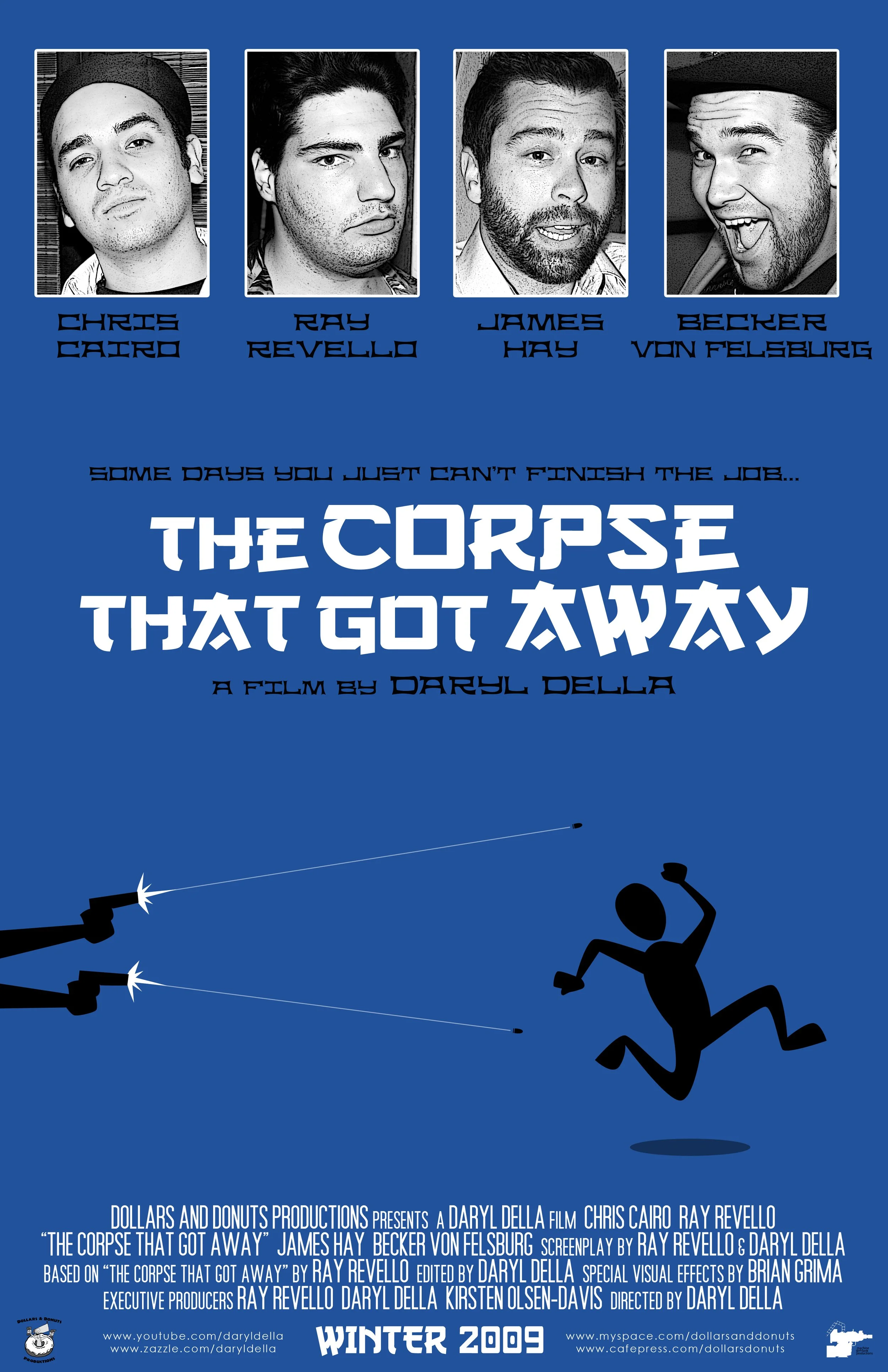
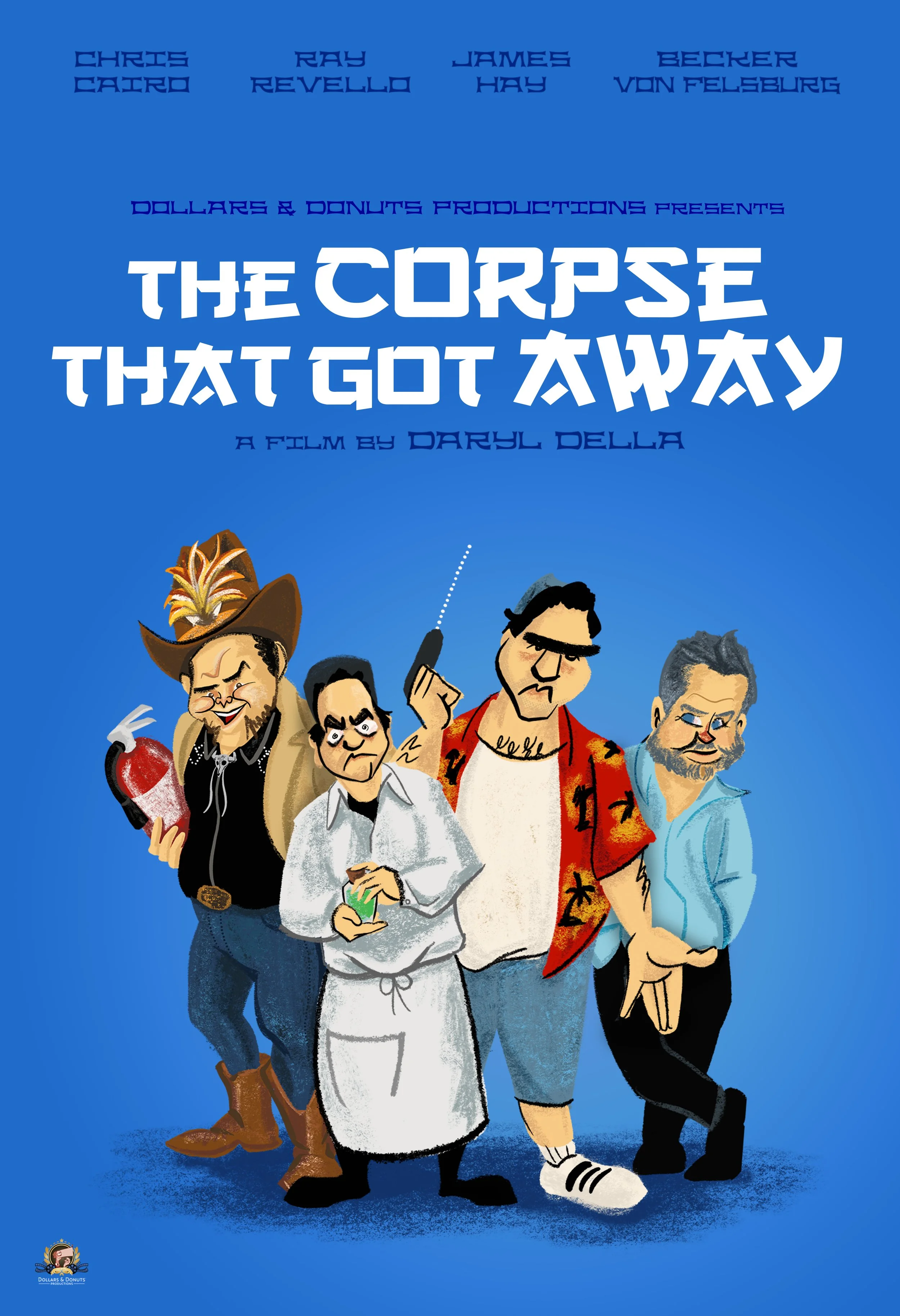
Wasa Wasa Sushi House, Millbrae, CA
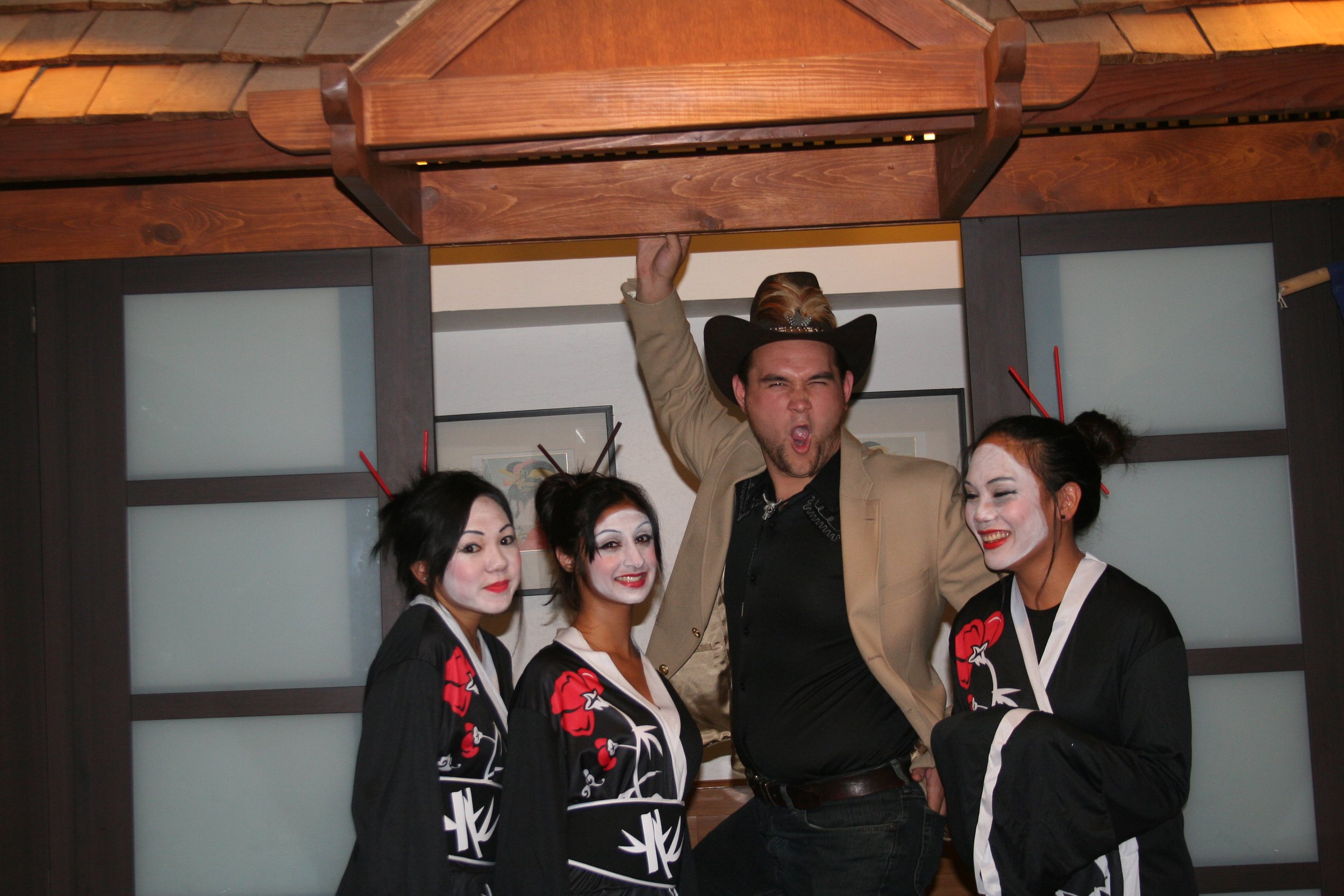
Behind the Scenes
The Corpse That Got Away had already failed once.
Ray Revello first made the story as a film-class project in 2007, shooting it on Super 16mm. The production ran out of film stock during its climactic scene and simply stopped. The movie was never completed, but the title and basic idea survived, hanging around long enough to become useful again two years later.
By then, Daryl and Ray had gone through a falling out and spent a period making films separately. Returning to The Corpse That Got Away became part of their reunion. Rather than finish the abandoned version, they started over.
The first version ran out of film. The second one brought Daryl and Ray back together.
The screenplay came together quickly. Daryl and Ray locked themselves in Daryl’s bedroom and hammered out the new version in under an hour. What they already had was a location. Ray’s Circuit City coworker Andrew Song had access to his family’s restaurant, Wasa Wasa Sushi House in Millbrae, and the building effectively became the blueprint for the movie. Its dining room, garage, stairwell, and surrounding spaces gave them a series of ready-made places to stage the increasingly complicated aftermath of a very simple murder plot.
Instead of writing a story and then trying to find places that could accommodate it, Daryl and Ray wrote around what they knew they could use. The geography of the restaurant became part of the screenplay.
Other pieces arrived just as quickly. The Texan was written with Becker Von Felsburg in mind, taking the character’s oversized personality from the person they already knew would play him.
The film also gave several familiar faces more room than they had been given before. Chris Cairo, already a longtime collaborator, finally moved into the center of a story as Roger. Opposite Ray’s Dennis, the two spend much of the movie arguing over which of them is more competent while steadily producing evidence that neither one is.
Lorenzo Ocon made his first substantial move away from the hidden-camera and stunt material that had defined many of his earlier appearances. As Andrew, a role originally intended for Andrew Song himself, Lorenzo stepped into a conventional scripted character and began a transition toward the larger acting parts he would take on later.
Richard Castromayor made a similar jump. After years of appearing around the edges of productions, he was given a major speaking role as the Sushi Chef. James Hay returned after Revenge of the Golden Hoot, while Becker, Melissa Roncal, Roshelle Nand, and Rovie Torres helped turn a restaurant borrowed for the night into a considerably stranger place.
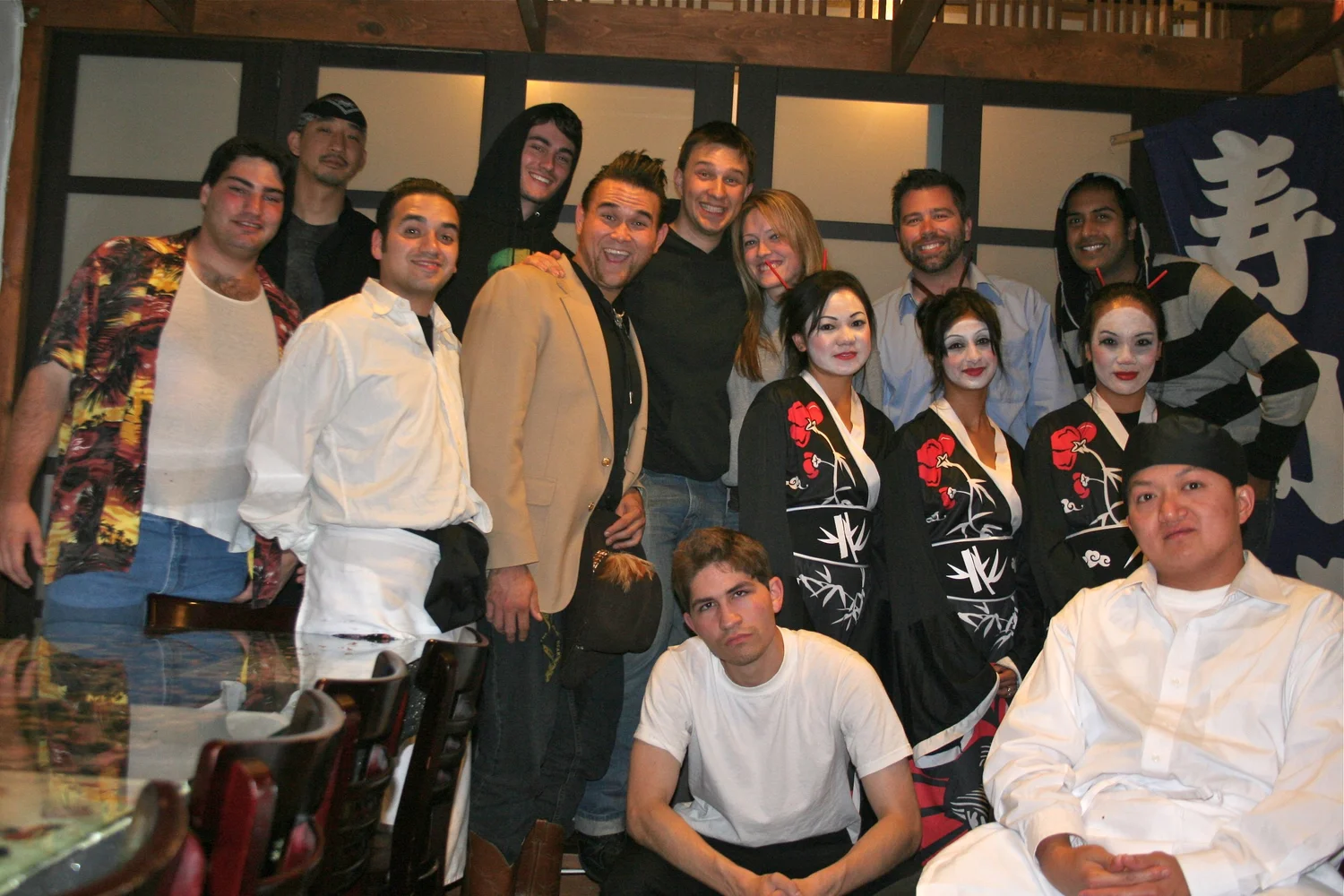
The crew was also becoming more ambitious about what it could put on screen. For one killing, Daryl wanted an actual burst of blood rather than another effect created entirely in the edit.
Brian Grima, who Daryl had met and befriended while working at Office Depot, took on the problem. Working from a blood-shooter design Daryl had found online, Brian modified the idea into something more portable, building the device from PVC and a Pepsi bottle. The contraption was tested late at night in schoolyards, where spraying fake blood everywhere seemed marginally easier to explain.
Brian joined the production for the second day of filming and the effect worked. Blood hit the wall. The shot was in the movie. More importantly, nothing essential exploded.
What Brian remembered years later was what happened afterward. He expected a crew making this kind of mess to simply leave it behind. Instead, everybody stayed and cleaned the place. It was a small thing, but it changed his impression of the group. The operation might have looked chaotic, but the people involved took care of the place that had let them film there.
Blood hit the wall. The shot was in the movie. More importantly, nothing essential exploded.
The film also marked another first for Dollars & Donuts: an original song written specifically for the movie.
Daryl wrote the lyrics to “One Geisha Is Fine,” Becker Von Felsburg wrote the music and performed it in character as the Texan. Rather than stopping the film for a musical number, the song plays under the end credits, extending the joke beyond the final scene and giving Becker’s character one last word.
It was a small addition, but a meaningful step forward. Until then, the films had largely relied on existing music, stitched together from whatever fit the moment. The Corpse That Got Away was the first time the group created a song of its own, tailored to a character, a joke, and a specific place in the film.
None of this suddenly made Dollars & Donuts polished. Daryl’s later assessment was considerably less charitable: the movie was still “looking like shit and sounding like shit.”
But the ambitions had changed. The group was writing around real locations, building practical effects, expanding supporting players into actual characters, and constructing a fifteen-minute story that had to keep escalating without collapsing under its own stupidity.
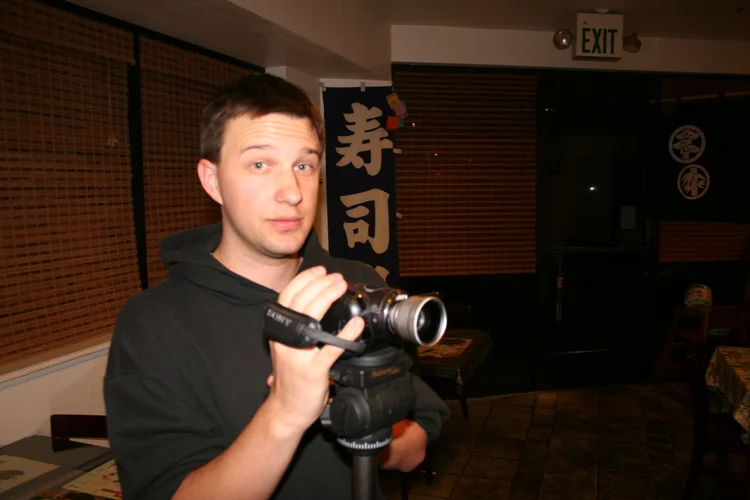
The old improvisational instinct was still there. It had simply acquired a screenplay, a blood cannon, and a restaurant.
The idea to premiere The Corpse That Got Away came from Chris Cairo. Chris had always had a strong instinct for promotion and presentation, and he became one of the architects of that side of Dollars & Donuts, pushing the films beyond simply being finished and toward actually being shown, promoted, and treated like events.
The Comet Club was an obvious choice. It was one of Daryl and Ray’s regular hangouts at the time, in large part because their friend Kristin Mayer worked there, and it already felt connected to the group’s social life. On November 24th, 2009, the bar became the site of the first proper Dollars & Donuts premiere.
The place was packed. Everyone gathered around the little television above the bar and watched the movie together. For a group that had spent years passing DVDs around, showing cuts to friends, and watching their work in classrooms or living rooms, suddenly having a room full of people there specifically to see one of their films was exhilarating.
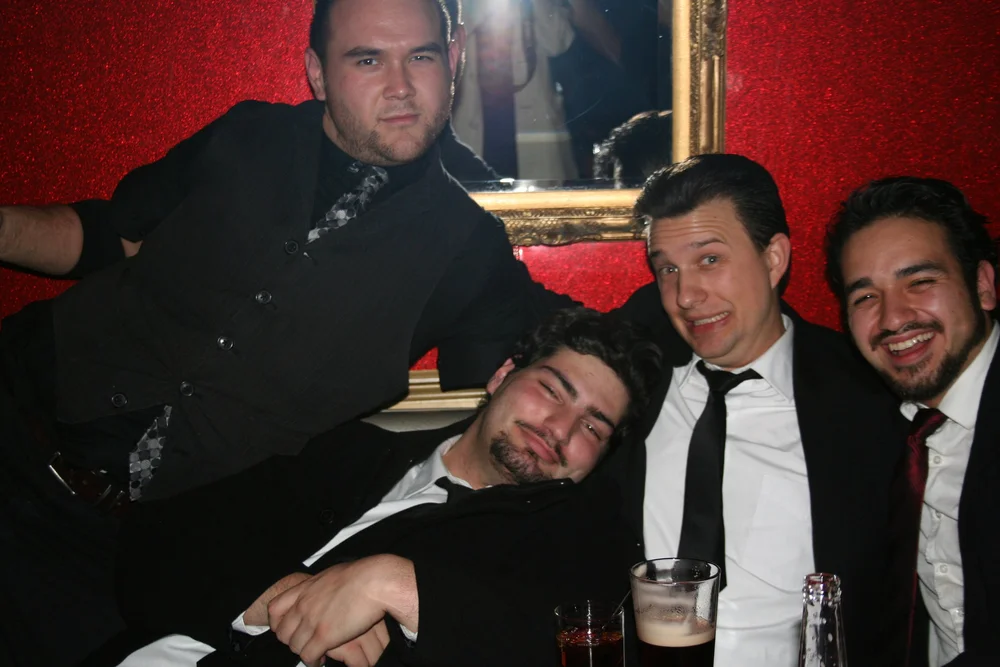
It was also terrifying.
Daryl and Ray decided they couldn’t sit through it with the audience. Once the movie started, the two slipped out and went to the bar next door for a drink while everyone else watched. They returned when it was over.
That became a small tradition for a while, disappearing during the screening rather than experiencing the audience firsthand. It was fun, but there was fear underneath it too. Making something was one thing. Sitting in a room and listening to strangers react to it was another.
As the premieres eventually grew from bars into theaters, that habit disappeared. Daryl learned to stay in the room, watch with the audience, hear the laughs and the silences, and enjoy the part of filmmaking that had once seemed easier to avoid.
Making the movie was no longer necessarily the end of the process.
When Daryl showed the finished film to his dad, Hank Della watched it with a much more critical eye. He liked it. In fact, he told Daryl it was the best movie the group had made. Then he told him the ending was dumb.
The problem was the Texan. At the end of the film, Becker’s character simply steals Roger and Dennis’ car. It gets the story where it needs to go, but nothing in the movie has given him a reason to do it. Hank pointed out that the fix could have been almost embarrassingly simple. When the Texan is introduced, give him a line about needing to get somewhere. Have him complain that he needs a ride. Anything that plants the idea before the payoff.
It was Screenwriting 101, and Daryl was frustrated and angry as his father explained it to him. Mainly because he was right.
Mainly because he was right.
The criticism stuck. For years, Daryl and Ray had learned filmmaking largely by making the next movie and discovering afterward what they had done wrong. Hank approached the problem differently. He looked at the script, found the missing setup, and showed how one small piece of writing could make the entire ending work better.
Somewhere in that conversation, another idea started forming. If his dad could see the problem that clearly, maybe he should write something for them.
Daryl turned to Hank for what was supposed to be the group’s next major project, another leap toward something more deliberate and dramatically mature.
That project was Number Nine.

dollars & donuts continuity
The Corpse That Got Away receives a notable callback in the Dollars & Donuts universe through a reference in 2010’s Something Else. During a scene in which Bill Bixler watches TV, a news anchor recounts the events of the film, describing the string of homicides that occurred at the Wasa Wasa Sushi House. The segment includes audio of the Texan’s unmistakable and wild “Yeeee-HAAAAWWW!” echoing through the broadcast.
Want to see how this chaotic nod ties into the larger Dollars & Donuts universe? Check out Something Else next and catch the madness unfold!